Estimates
Interstate estimates
A move that crosses a state line is a federal matter. Yembo prices it from surveyed weight against your own tariff, and produces the written estimate the FMCSA rules require, binding or not-to-exceed with confidence.
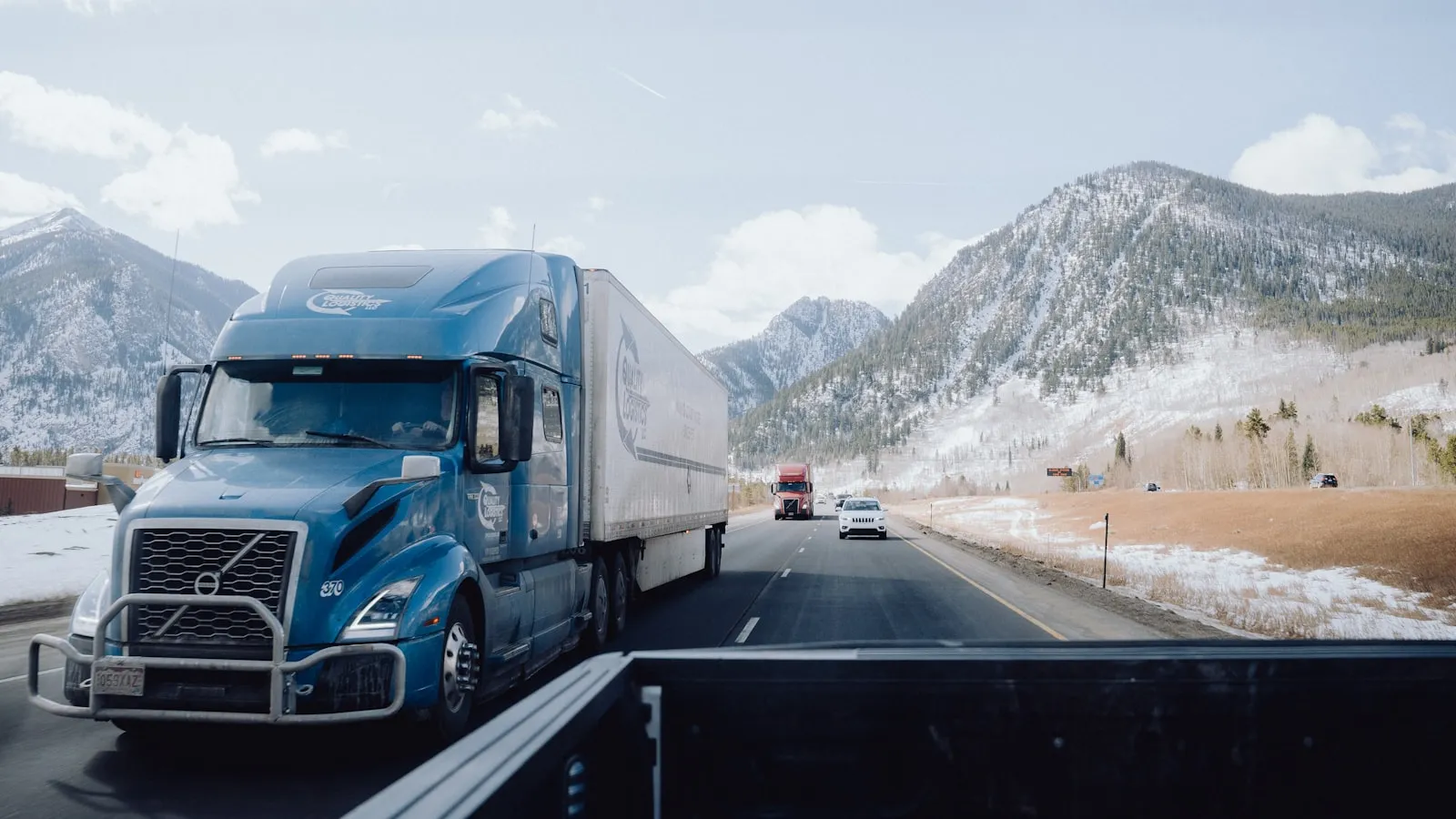
Photo by Bailey Alexander (opens in a new window) on Unsplash (opens in a new window)
Why every mover prices differently, a story from 1980
Interstate estimating used to be simple, and the reason it no longer is has a signature on it. In one year, Jimmy Carter signed away the shared rate book and signed in the binding estimate, and every quote a mover writes today works the way it does because of those two pens.

Before 1980
One rate book for everyone
The Interstate Commerce Commission governed interstate moving, and carriers set rates collectively through tariff bureaus. Every mover quoted from effectively the same book, and a binding estimate was not just rare, it was prohibited. The estimate was a lookup, and competing on price was hardly possible.
July 1, 1980
The Motor Carrier Act
President Jimmy Carter signed the Motor Carrier Act of 1980, declaring the law would bring the trucking industry into the free enterprise system, where it belongs. Entry opened, route restrictions fell, and carriers could price independently for the first time in generations.
October 15, 1980
The Household Goods Transportation Act
Three months later Carter signed the moving industry its own charter. The act authorized carriers to rate a move on a written, binding estimate, legalizing the guaranteed price, and paired the new freedom with consumer protections that survive in today's rules.
1995 and after
The ICC dissolves, the FMCSA inherits
The ICC Termination Act retired the commission and moved household goods oversight to the Department of Transportation, where the FMCSA now enforces the consumer protection rules of 49 CFR Part 375. The rate book never came back.
Deregulation traded one shared rate book for thousands of private ones. Pricing freedom is why a mover can win on price at all, and it is also why every interstate estimate now depends on the mover's own tariff, its own weight, and its own judgment. The complexity is not a malfunction. It is the market working, and it is exactly the arithmetic Yembo was built to carry.
Sources
The federal rules the estimate answers to
Interstate household goods carriage is regulated by the Federal Motor Carrier Safety Administration, and its consumer protection rules in 49 CFR Part 375 are specific about estimates.
A written estimate is mandatory
Before executing an order for service, an interstate mover must estimate the total charges in writing, binding or non-binding. A phone number scribbled on a lead is not an estimate under the rule.
Binding or non-binding, declared up front
A binding estimate guarantees the price for the listed goods and services. A non-binding estimate settles on actual weight and the tariff in effect, so the accuracy of the weight is the accuracy of the price.
The 110% rule
On a non-binding estimate the mover may collect no more than 110% of the estimated charges at delivery. Underestimate a shipment and the balance waits 30 days, which makes a defensible weight worth real money.
Disclosure documents ride along
The rules require the shipper to receive the federal consumer booklet and the mover's arbitration and complaint procedures. The estimate is the anchor document the rest attach to.
Sources
- 49 CFR Part 375, transportation of household goods in interstate commerce (opens in a new window)
- FMCSA regulations and enforcement of interstate moves (opens in a new window)
- Your Rights and Responsibilities When You Move, appendix A to Part 375 (opens in a new window)
This page summarizes public information for movers and is not legal advice.
Your 400N-style tariff, running the numbers
The estimating engine models an interstate tariff the way the industry writes one, so your published pricing loads in as it is rather than flattened into a spreadsheet.
Linehaul from weight, distance, and basing points
Transportation charges price from shipment weight and mileage against your basing city structure, the way a 400N-style tariff expects, with additional weight and mileage brackets where the shipment lands between rows.
The full accessorial stack
Fuel surcharge, origin and destination service, shuttle, shorthaul, bulky articles, storage in transit, and third-party services each carry their own schedule, so the estimate itemizes instead of burying.
Packing, full or single-factor
Price packing per carton and material, or as a single factor against shipment weight. Both live in the same tariff, so offering the customer either is a toggle rather than a rebuild.
Valuation priced correctly
Released value at 60 cents per pound or full value protection with minimums and deductibles, priced from the tariff. The valuation conversation happens on the estimate, where the rules want it.
Why survey accuracy is an interstate pricing strategy
Every protection in the federal rules turns on the estimated weight. A binding quote built on a bad weight eats the difference; a non-binding one collides with the 110% rule and waits a month for the balance. The estimate is only as strong as the inventory under it, which is why Yembo starts with a video survey of the actual home rather than a checklist over the phone.
States and the District of Columbia
A move that stays inside one of these jurisdictions answers to it rather than to the federal rules. Each page carries the regulator, the credential, and the estimate rules, with sources.
- Alabama
- Alaska
- Arizona
- Arkansas
- California
- Colorado
- Connecticut
- Delaware
- Florida
- Georgia
- Hawaii
- Idaho
- Illinois
- Indiana
- Iowa
- Kansas
- Kentucky
- Louisiana
- Maine
- Maryland
- Massachusetts
- Michigan
- Minnesota
- Mississippi
- Missouri
- Montana
- Nebraska
- Nevada
- New Hampshire
- New Jersey
- New Mexico
- New York
- North Carolina
- North Dakota
- Ohio
- Oklahoma
- Oregon
- Pennsylvania
- Rhode Island
- South Carolina
- South Dakota
- Tennessee
- Texas
- Utah
- Vermont
- Virginia
- Washington
- West Virginia
- Wisconsin
- Wyoming
- District of Columbia
Territories
The territories run their own moving programs, so a move inside one answers to that territory rather than to any state.
Every estimating authority
Wherever the move is headed, the estimate comes from the same engine and the same survey.
Estimates overview
Every kind of move, one estimating engine.
Local
Hourly pricing inside one service area.
Intrastate
State-regulated moves, with a page for every jurisdiction.
Domestic
In-country moves outside the United States model.
International
Overseas moves across all three transport modes.
International by road
Cross-border truck freight and customs handling.
International by sea
Container and groupage pricing from a survey volume.
International by air
Chargeable weight pricing for fast shipments.
See an interstate estimate built from a real survey
A 30-minute walkthrough with our team, from smartphone survey to a signed, compliant estimate.
Request a Demo