Patents
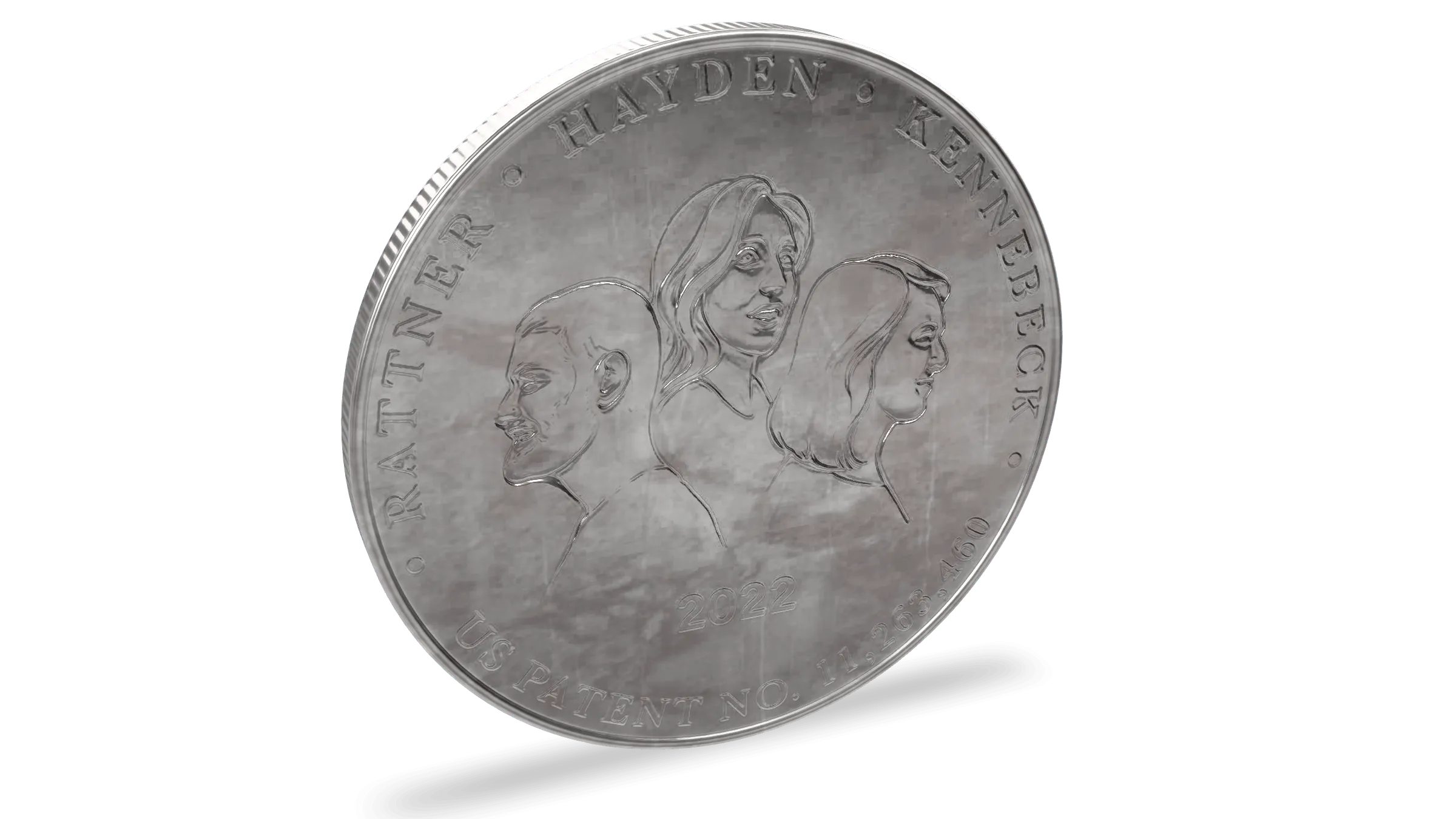
The Yembo platform is protected by the United States patents listed below.
Virtual patent marking notice
This page serves as notice under 35 U.S.C. § 287(a) (opens in a new window) that the Yembo products and services, including their components and the methods they carry out, are covered by one or more of the patents listed here. The listing is not exhaustive, and the absence of a number does not mean that a product is unpatented. Nothing on this page grants a license to any patent, and nothing here states the scope of any claim, which is determined by the patent itself.
Granted patents
Granted
Anonymizing Personally Identifying Information in Image Data
US 12,400,033 (opens in a new window)
Detects personally identifying information in captured image data and anonymizes it before the rest of the pipeline builds a representation of the location.
Abstract
Receiving image data of a location in the form of a video feed, pictures, and/or depth information, as examples, from a client device controlled by a user, and/or other data is described. The received data serves as an input to a model (e.g., an artificial intelligence (AI)-based model such as a machine learning model) configured to generate an electronic representation of the location enriched with spatially localized details about surfaces and contents of the location. The electronic representation can be used for various purposes. The present disclosure provides a systems, methods, and computer programs that resolve several impediments in existing three dimensional image data acquisition and/or visualization systems by anonymizing personally identifying information (PII) in the received image data.
Inventors: Zach Rattner, Devin Waltman, Noel Kennebeck, Maciej Halber
Granted
Browser Optimized Interactive Electronic Model Based Determination of Attributes of a Structure
US 11,989,848 (opens in a new window)
Runs an interactive 3D representation of a scanned property inside a browser, so a user can verify and correct dimensions, locations, and cut outs without a native application.
Abstract
An interactive 3D electronic representation of a physical scene is executed in a browser. The browser has a limited computing capability compared to a native application or hardware usable by the computer. The interactive 3D representation is configured to minimize overall computing resources and processing time. Attributes of data items corresponding to surfaces and/or contents in the physical scene are extracted from the interactive 3D representation. Interactive verification of the attributes of the subset of data items is performed in the browser by: flattening a selected view of a ceiling, floor, or wall two dimensions; receiving user adjustments (if needed) to the dimensions and/or locations of the selected ceiling, floor, or wall; receiving user indications (if needed) of cut outs in the selected ceiling, floor, or wall; and updating the interactive 3D representation based on adjustments to the dimensions and/or locations, and/or the indications of cut outs.
Inventors: Kyle Babinowich, Maciej Halber, Marc Eder, Janpreet Singh, Zach Rattner, Siddharth Mohan
Granted
Systems and Methods for Building a Virtual Representation of a Location
US 11,657,419 (opens in a new window)
Turns images and video of a location into a 3D model, then annotates that model with spatially localized metadata and semantic information about the elements inside it.
Abstract
Systems, methods, and non-transitory computer readable media are disclosed that include operations to generate a virtual representation of a physical location with spatially localized information related to elements within the location being embedded in the virtual representation. The operations includes receiving description data (e.g., a plurality of images and videos) of the location, the description data being generated via at least one of a camera, a user interface; receive metadata associated elements within the location; generating (e.g., offline or in real-time), via a machine learning model and/or a geometric model, a 3-dimensional (3D) model of the location and elements therein; and generating, based on the 3D model of the location, an information-rich virtual representation of the location by annotating the 3D model with spatially localized metadata associated with the elements within the location and semantic information of the elements.
Inventors: Marc Eder, Siddharth Mohan, Maciej Halber, Anoop Jakka, Devin Waltman, Zach Rattner
Granted
Capacity Optimized Electronic Model Based Prediction of Changing Physical Hazards and Inventory Items
US 11,657,418 (opens in a new window)
Extracts hazards, structure, layout, and contents from a scan of a home so an insurer can underwrite against observed property data instead of assumptions drawn from an online form.
Abstract
The process of obtaining an insurance quote is currently based on information provided by filing online forms. Insurance companies use the consumer input data from online the forms to provide a quote for property insurance and for insurance underwriting. To complete the underwriting, the insurance companies have to make assumptions on various factors; for example, the structure and layout of a consumer's home, what type of content the consumer owns, its value, and its condition, among several others. It is desirable to get more accurate data on the consumer content, the structure and layout of the home, as well as other factors (e.g., hazards such as whether a house is on a canyon) in an automated fashion which would let insurance companies underwrite policies with a more accurate risk profile as well as save costs by not having to send an onsite inspector.
Inventors: Devin Waltman, Siddharth Mohan, Anoop Jakka, Marc Eder, Maciej Halber, Zach Rattner
Granted
Identifying Flood Damage to an Indoor Environment Using a Virtual Representation
US 11,521,273 (opens in a new window)
Establishes a reference line for the maximum vertical extent of flood damage in a virtual representation of a room, then identifies which contents sit at or below it.
Abstract
Disclosed is a method for using a virtual representation of an indoor environment to identify contents that have been damaged (e.g., by flooding). A virtual representation of a physical scene of an indoor environment is processed to identify a list of contents in the physical scene. The virtual representation may include 2-dimensional representations of the physical scene (e.g., images or video) or a 3-dimensional representation of the physical scene (e.g., 3D digital model). A reference line is determined in the virtual representation that is indicative of a maximum vertical extent of the damage in the physical scene. The position of the reference line is compared with the position of the identified contents in the virtual representation to determine contents that are likely to be damaged. For example, the contents that are at or below a plane represented by the reference line in the virtual representation may be identified as damaged.
Inventors: Anoop Jakka, Siddharth Mohan, Devin Waltman, Marc Eder, Maciej Halber, Zach Rattner
Granted
Artificial Intelligence Generation of an Itemized Property and Renters Insurance Inventory List for Communication to a Property and Renters Insurance Company
US 11,334,901 (opens in a new window)
Generates an itemized property and renters insurance inventory from a scan of a location captured by a camera, computer vision device, inertial measurement unit, or depth sensor.
Abstract
Systems and methods for providing AI-based cost estimates for services are disclosed. The method may comprise receiving, at one or more processors, data from a scanning of a location, the scanning performed by one or more of a camera, a computer vision device, an inertial measurement unit, or a depth sensor. Data may be received, at one or more processors, related to the identification of one or more key elements at the location. An itemized statement and quote of work to be performed may be generated at one or more processors.
Inventors: Zach Rattner, Siddharth Mohan
Granted
Systems and Methods for Providing AI-Based Cost Estimates for Services
US 11,270,363 (opens in a new window)
Builds an inventory with contextual attributes from description data of a location, then generates interactive relocation quotes from that inventory.
Abstract
Systems and methods for providing AI-based relocation cost estimates for services and products are disclosed. The method may comprise receiving description data of a location, the description data generated via at least one or more of a camera, a user interface, and/or one or more environment sensors. The method may generate an inventory list comprising a plurality of items, utilizing the machine learning model, based on the description data, the inventory list further comprising inventory attributes associated with the plurality of items related to a context of the plurality of items in the location. The method may generate, utilizing the machine learning models, one or more interactive quotes for relocation cost estimates comprising at least one or more offers for products and/or services based on the plurality of items in the inventory list and the inventory attributes.
Inventors: Zach Rattner, Siddharth Mohan, Vikram Gupta
Granted
Schema Translation Systems and Methods
US 11,263,460 (opens in a new window)
Relays a live video feed from a client device to a remote agent while a machine learning model identifies objects in the feed and adds them to a list.
Abstract
Systems, methods, and computer program products are disclosed that include receiving, at a schema translator in communication with a master device, a video feed from a client device. The video feed may be relayed to the master device to allow a substantially simultaneous display of the video feed at the master device. A snapshot from a frame in the video feed may be acquired. An object in the snapshot may be identified during the video feed by a machine learning model and added to a list.
Inventors: Zach Rattner, Tiana Hayden, Noel Kennebeck
Granted
Systems and Methods for Providing AI-Based Cost Estimates for Services
US 10,867,328 (opens in a new window)
Connects visual description data of a location to the models that produce a priced inventory, which is the foundation the later quoting patents build on.
Abstract
Systems and methods for providing AI-based relocation cost estimates for services and products are disclosed. The method may comprise receiving description data of a location, the description data generated via at least one or more of a camera, a user interface, and/or one or more environment sensors. The method may generate an inventory list comprising a plurality of items, utilizing the machine learning model, based on the description data, the inventory list further comprising inventory attributes associated with the plurality of items related to a context of the plurality of items in the location. The method may generate, utilizing the machine learning models, one or more interactive quotes for relocation cost estimates comprising at least one or more offers for products and/or services based on the plurality of items in the inventory list and the inventory attributes.
Inventors: Zach Rattner, Siddharth Mohan, Vikram Gupta
Granted
Artificial Intelligence Prediction Algorithm for Generating an Itemized Statement of Work and Quote for Home Services Based on Two-Dimensional Images, Text, and Audio
US 10,528,962 (opens in a new window)
The first granted patent. Predicts an itemized statement of work and a quote for home services from two-dimensional images, text, and audio.
Abstract
Systems and methods for providing AI-based cost estimates for services are disclosed. The method may comprise receiving, at one or more processors, data from a scanning of a location, the scanning performed by one or more of a camera, a computer vision device, an inertial measurement unit, or a depth sensor. Data may be received, at one or more processors, related to the identification of one or more key elements at the location. An itemized statement and quote of work to be performed may be generated at one or more processors.
Inventors: Zach Rattner, Siddharth Mohan
Pending applications
Additional patents may be pending in the United States and elsewhere. Trademark usage is covered separately on the trademarks page.